

Our process
From city log to finished furniture: our mill and shop
All our projects start on the eastern slope of East Rock Park and are crafted by hand at our shop in central Connecticut.
01 · The mill
An old idea, made new where it began
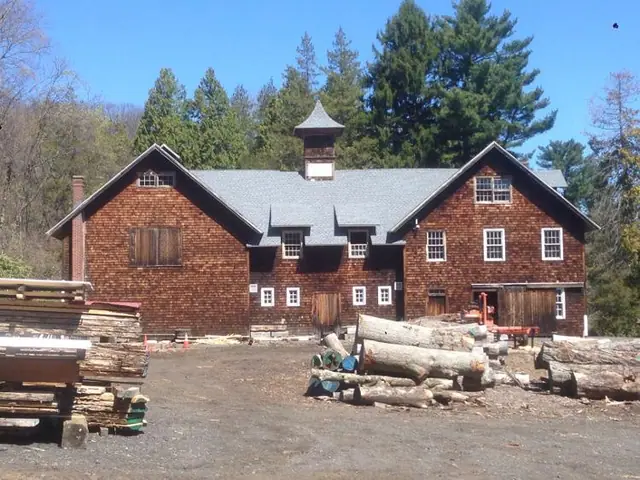
Our mill yard is on the eastern slope of New Haven’s historic East Rock Park, a 425-acre park with gorgeous topography and winding carriage trails designed by the Olmsted Brothers in the 1880s. Our mill sits just above where the Olmsteds planted their nursery while developing the park.
Down the hill is the building that still houses the old belt-driven woodworking equipment the city used 100 years ago to turn city trees into fences, tables, flooring and footbridges. Just beyond it is the tree nursery of the Urban Resources Initiative, the non-profit responsible for tree planting across New Haven.
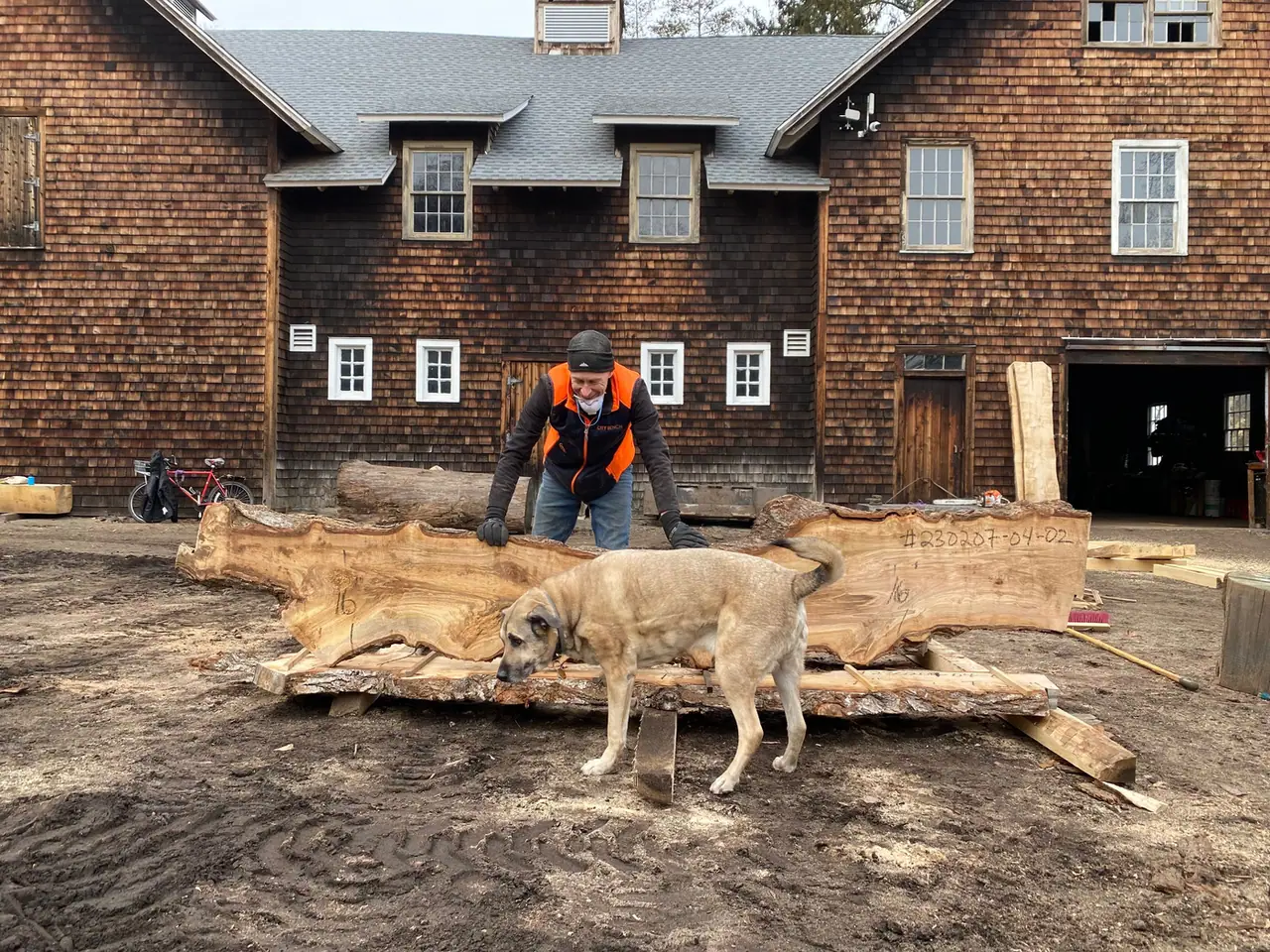
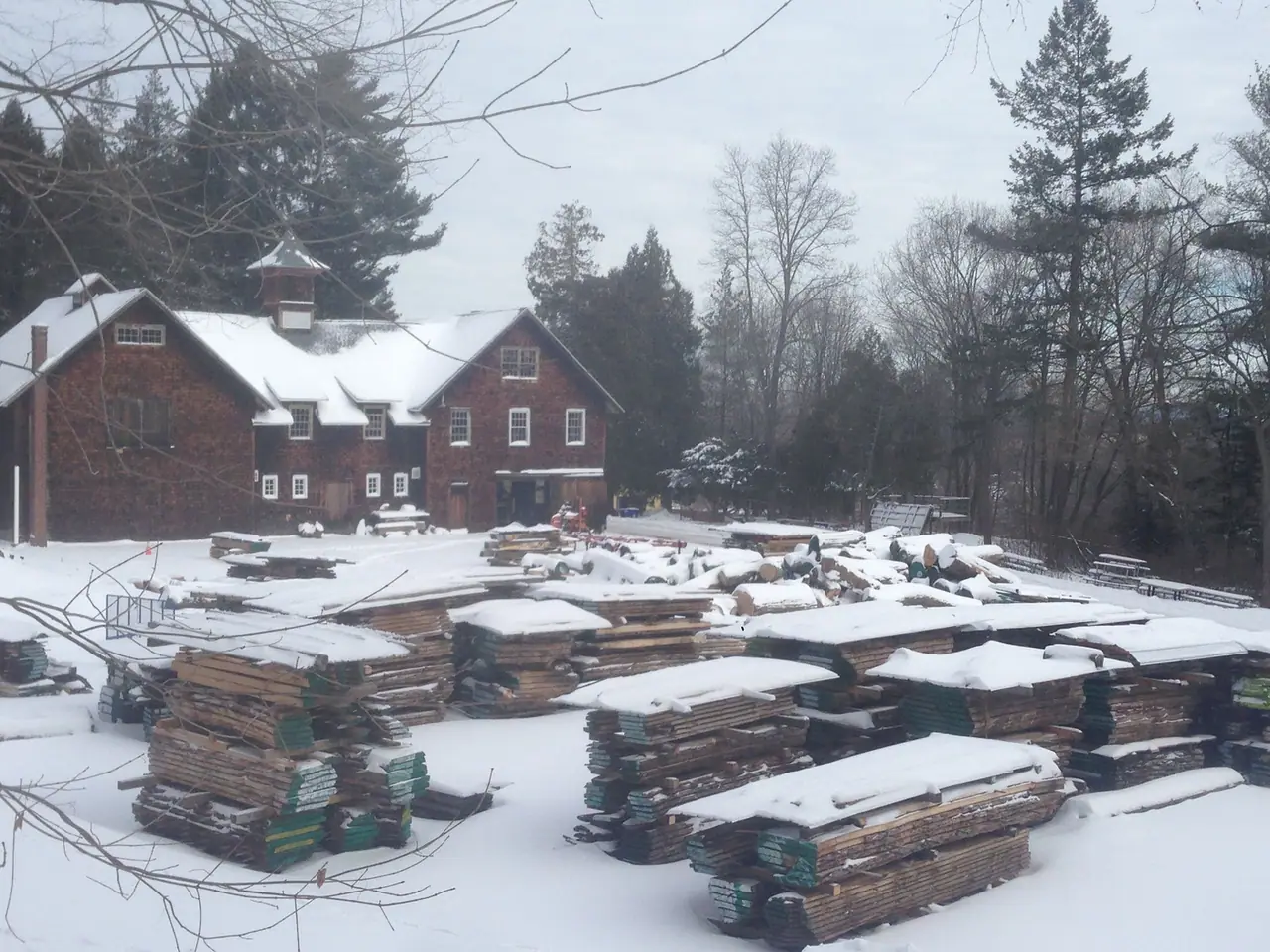
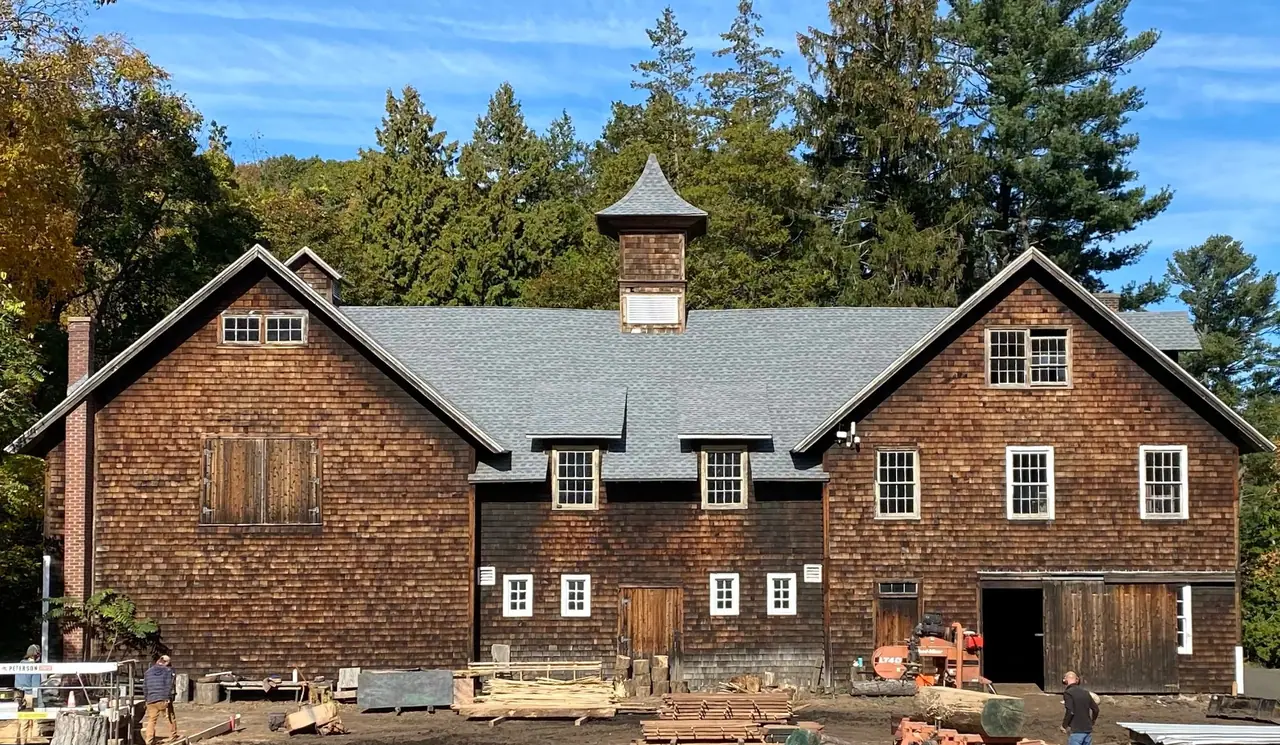
You’ll notice a large shingled barn behind many of our slab photos. That is the historic Sheep Barn, built in 1902 after Hartford gave New Haven four sheep, which grew into a flock that grazed the fields of East Rock.
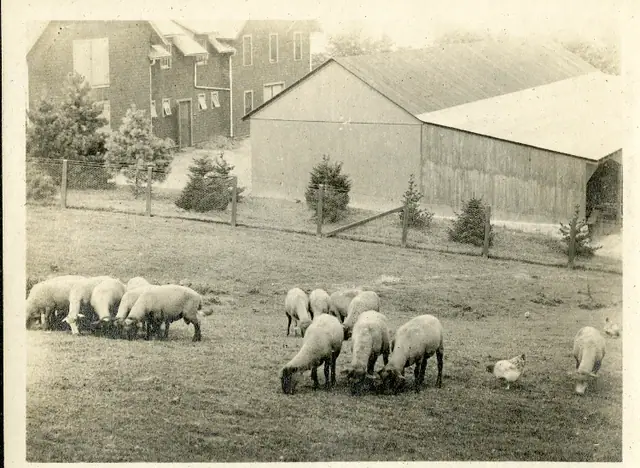
The Sheep Barn and flock at East Rock, photographed in 1915.
Connecticut is #1
Connecticut has the highest percentage of tree cover in urban and community areas of all 50 states: 67%.

02 · How we mill
Slabs, lumber and patience
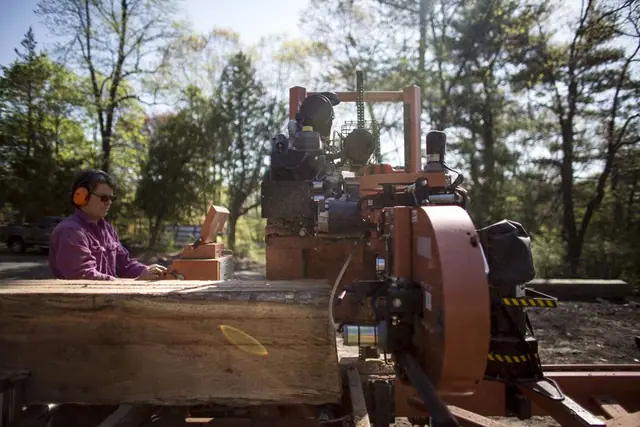
We flitch saw most logs, keeping both natural edges, and restack each log with stickers between the slabs so air can flow as the wood cures. Slabs air dry below 28% moisture before the kiln takes them to 6–8%.
We produce slabs 4′–20′ long and 12″–60″ wide, and lumber from 4/4 to 12/4 in quarter, rift or flat sawn, on two mills: the Wood-Mizer LT-40 Wide bandsaw and the Peterson DWS chainsaw mill, which handles logs up to 63″ in diameter.
Moisture content · air dried below 28% → kiln dried to 6–8%
03 · The shop & showroom
Three barns in Higganum
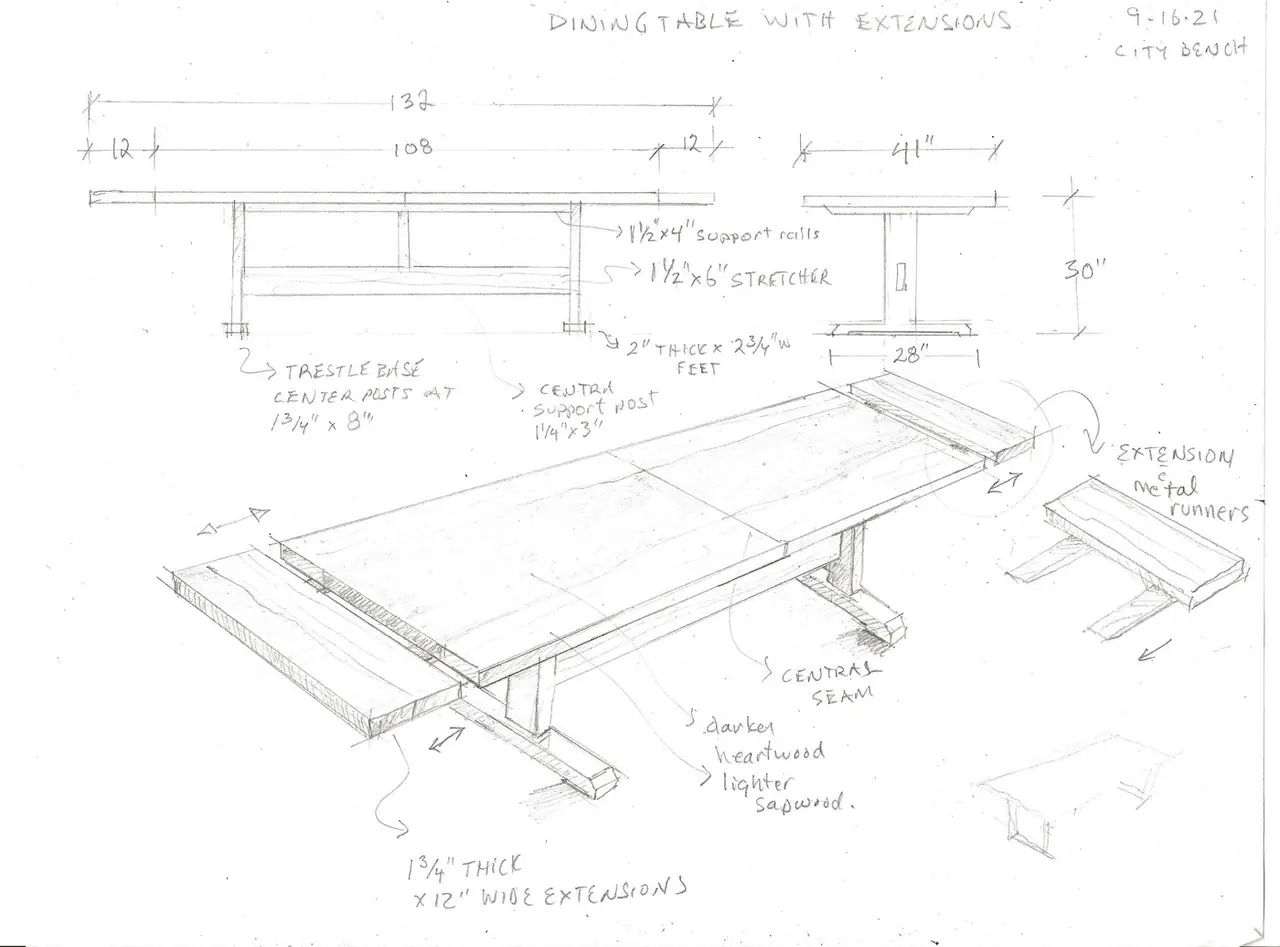
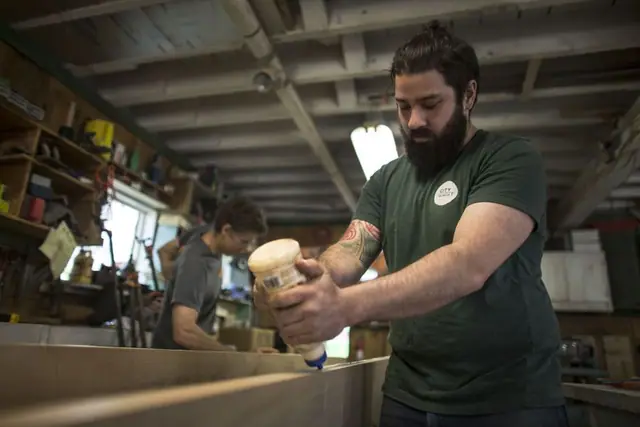
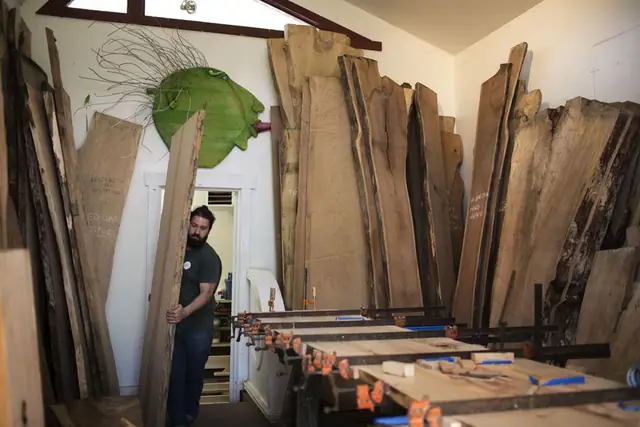
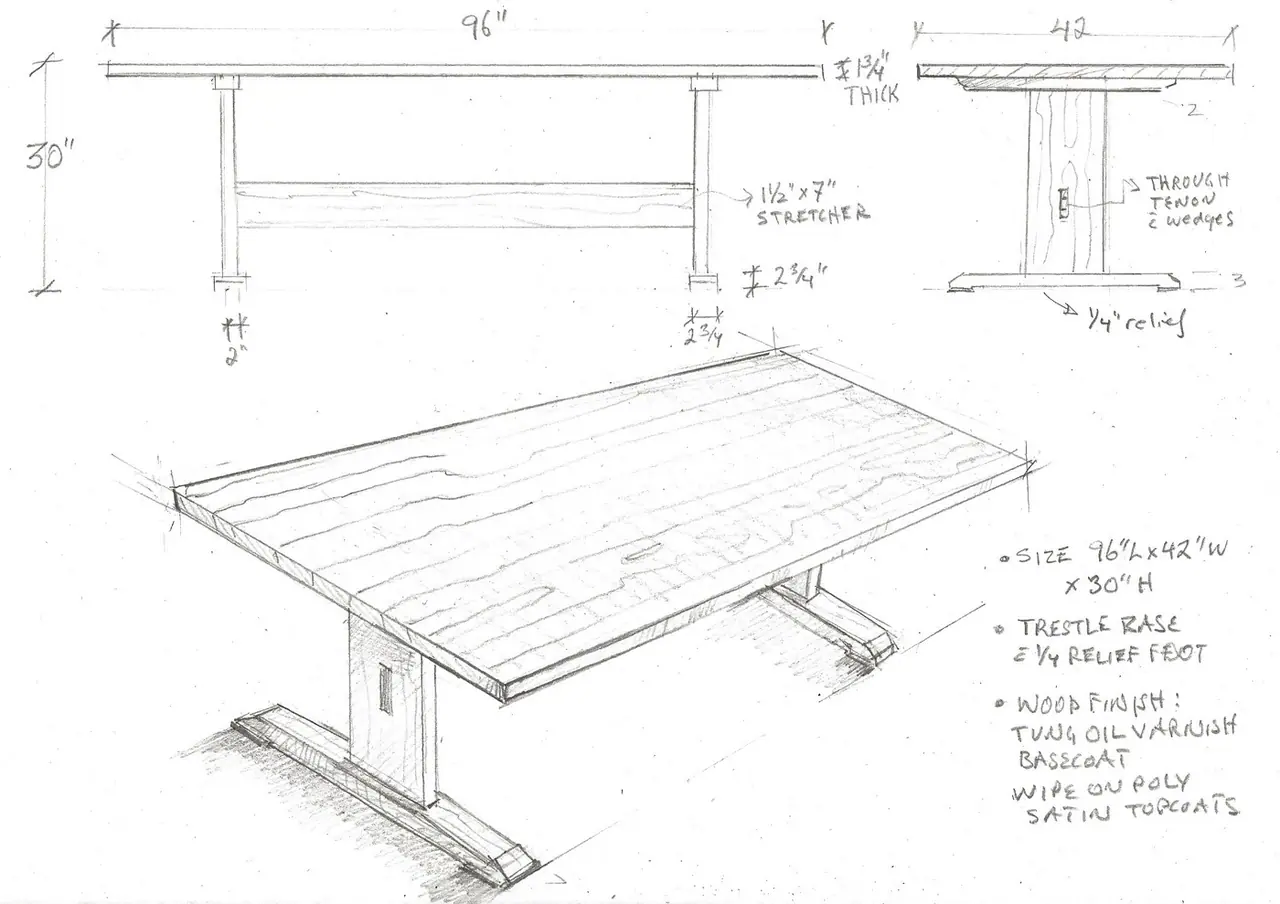
We build all our furniture out of three barns in Higganum, CT: our woodshop, our finishing studio and our kiln for drying slabs and lumber, plus a small metal shop in the front barn. Each project begins with an approved sketch.
Our showroom is down the street in a 19th-century hoe factory’s storage facility. Make an appointment to visit anytime. We’d love to see you.
See it for yourself
The City Bench process
 City Bench Process · 2:31
Start the conversation
Have a tree with a story? Let’s build its next chapter.
Tell us about your tree, your space or the piece you imagine. We’ll help you figure out what it can become.